
Map.
Publish every registered site, its inspection history, its owner, its ticker.
Cited. Scraped. Corrected. The base layer is open by default.Five schemes have committed roughly ₹4.1 lakh crore to critical industrial capabilities in India. The index sits between the public document that defines a checkpoint and the deal that consumes it.

Equity research inherits its unit from a world of quarterly manufacturing businesses. The unit is the company. A licence, a classification, an award: everything else arrives as news that happens to it.

That fits when the value of a business is the discounted path of its earnings. It breaks when a programme pays against sales, and the binding question is whether a bidder can source separated neodymium-praseodymium at spec.
No earnings model contains that variable. The metallurgy decides it, and the metallurgy is disclosed.
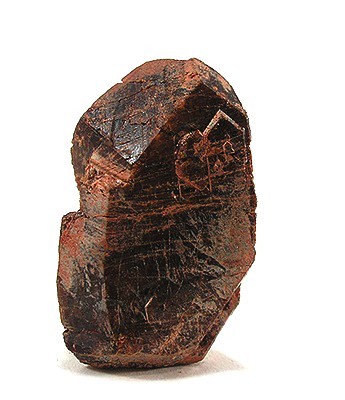
Monazite specimen · Madagascar
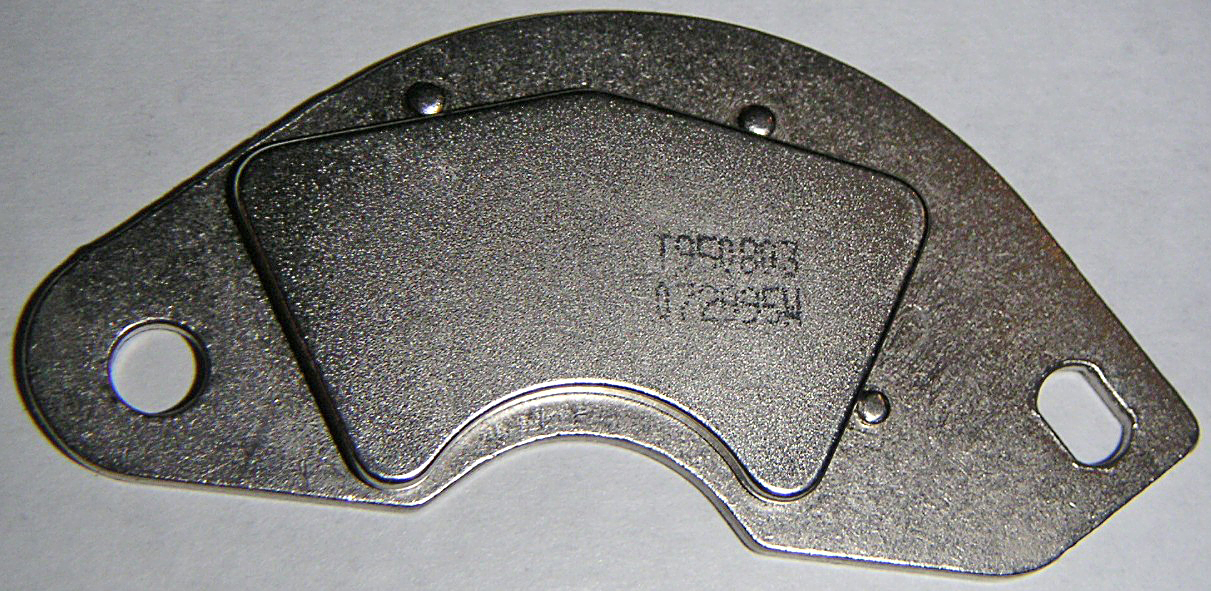
NdFeB magnet · illustrative studies
The ₹7,280 cr programme is 89% sales-linked. Twenty bidders compete for five slots, up to 1,200 MTPA each. Feedstock access is a first-order question.
A checkpoint is a first-class object: an owner, a date window, a fixed outcome set, an evidence base, and a probability.
Invert the relationship and a company becomes the set of checkpoints it is exposed to, weighted by revenue at risk.
A company’s fundamentals cannot be forecast from public documents. A checkpoint’s outcome frequently can.

Registered Indian sites under inspection. The largest pool outside the United States.
The observation text is the input. The outcome is NAI, VAI or OAI. The inspection becomes a dated question with a fixed set of answers.
See the registerSkyroot’s May 2026 $1B valuation marks India’s first private launch unicorn. The index asks about the checkpoint: the static fire, the date window, the outcome.
Publish every registered site, its inspection history, its owner, its ticker.
Cited. Scraped. Corrected. The base layer is open by default.Sell live checkpoint probabilities and rubrics to the desk that prices the exposure.
Versioned. Cited. Auditable.License checkpoint-aggregated indices with published methodology.
For a Category III that no longer trades single stocks.No. Counterfoil publishes maps, forecasts and indices. Capital is the customer. The fund is a separate vehicle downstream.
Most of the value-defining events in critical-industries programmes are public, dated and decided by documents that already exist when the price sets. Earnings models forecast from inputs that are not in the document set. Checkpoint models forecast from inputs that are.
A versioned, deterministic rubric. Six factors, fixed weights, no embeddings, no retrieval, no ML. The rubric is the publication.
A sealed record is hash-committed and timestamp-anchored before the outcome resolves. The hash and the anchor survive revision, retraction and any future dispute over what was known, when.
Four funded industrial programmes at once — magnets, critical minerals, nuclear and launch — alongside the largest concentration of FDA-inspected drug plants outside the United States. Domestic institutions set the marginal price and foreign institutions no longer do.
Desks that price the exposure. The methodology is published. The probabilities are not negotiable. The numbers update on a calendar and the calendar is fixed.
Carried in the closed universe. Scored on the same six factors. PSU participation is one factor among six, not a modifier on the rest.
The published probabilities move to the outcome. The rubric version at seal-time stays cited. The next checkpoint opens on the next document.
Photographs are illustrative; they do not depict the named bidders or inspected plants. Treatments include cropping, monochrome, duotone and dithering.


